
Showing posts with label fairytale. Show all posts
Showing posts with label fairytale. Show all posts
Friday, 2 December 2011
BUFFY 4.10 ‘HUSH’
The Gentlemen are coming...
WRITER: Joss Whedon
DIRECTOR: Joss Whedon
WHAT’S THE SITCH?
Buffy has a disturbing dream featuring a glimpse of a very creepy looking ghoul and a little girl singing a strange nursery rhyme. Back in awake land, she and Riley clearly like each other a lot but seem reluctant to communicate that fact to each other. Giles has an old friend to stay (Olivia) so he has Xander take Spike for a few days. Xander though is having problems with Anya. She wants to know where their relationship is going and Xander seems unable to communicate his feelings to her. Meanwhile Willow has joined a disappointing Wicca group but finds a possible new friend in quiet, mousy Tara. Later that night, a group of scary, ghoulishly grinning ‘Gentlemen’ float in to town accompanied by their weird straightjacket-clad henchmen. These ‘Gentlemen’ steal everyone in Sunnydale's voices, before then starting to harvest human hearts from conscious victims who've been rendered unable to scream. Trapped in total silence, Buffy and the gang eventually work out what’s going on. And the next night Buffy sets out on patrol to find and stop the nasty fairytale ‘Gentlemen’ before they can steal any more human hearts. The only problem being, Riley and his soldiers have been sent out too, meaning Buffy and Riley may very soon come face to face while battling the shared demonic threat.
WHAT’S THE SITCH BENEATH THE SITCH?
It’s all about communication. How often what we say gets in the way of what we mean. Actions usually do speak louder than words.
WHO’S GIVING US THE WIGGINS THIS WEEK?
The Gentlemen
WHY IT ROCKS
Everything about ‘Hush’ rocks! It’s a Joss episode and my second favourite episode of Buffy ever.
A legend. This episode is legendary. It can be argued that, along with one or two other episodes of Buffy, ‘Hush’ has transcended the series to become a pop culture entity in its own right. You can watch this ep totally separate from the rest of the series, know what’s going on, and absolutely love it. It is scary, creepy, vicious, visually stylish, funny, thematically rich and just all round fab. One of the best hours of television ever.
The Gentlemen. Inspired by fairytale villains mixed in with the influences of Nosferatu, Dark City’s ‘The Strangers’, and a heavy dose of Tim Burton weirdness, these guys are truly the stuff of nightmares. Their ghoulish appearance, eerie gliding, weirdly polite manner and horribly rictus grins only add to their uber creepiness. The best Buffy monsters by far, they have also earned a place in the wider pantheon of great screen monsters. A genius and truly scary creation. Brrr
Doug Jones. The fabulous mime artist/actor Doug Jones plays the lead Gentleman. You’ll know Doug’s work as Abe Sapien in Hellboy and as Pan in Pan’s Labyrinth amongst others. Once you know him he is easy to spot even under loads of make up. And he always manages to be brilliant!
The script. For a 44 min episode of which 27 mins has no dialogue, Hush is brilliantly written. A lot is exchanged between actors in looks, behaviour, body language i.e. using forms of communication other than speech as is the theme of the tale. Joss packs a lot in to the episode and makes it entirely character based (as always) and very, very funny, not to mention action packed and pretty darn creepy.
The direction and look. Joss also directs and does his usual sterling work. The episode looks gorgeous, from the dark and moody photography to the splendid art direction to the gloriously creepy make up and visual FX. This ep could happily be shown on the big screen. I wish it would be. Joss keeps his usual directorial style of long takes and playing scenes in one shots (keeping the actors in frame at the same time, not cutting between them). This helps lend extra chemistry and energy to scenes.
The score. Christophe Beck provides a lot of music in a wonderfully spooky Danny Elfman-esque score. It reminded me a bit of Sleepy Hollow (which came out about the same time as Hush).
The ‘Who are The Gentlemen?’ lecture theatre scene. Giles provides a hand drawn overhead projector presentation to the gang (while playing Danse Macabre on a tape deck) spelling out who The Gentlemen are and what they plan to do. This scene is utterly brilliant and is now iconic in TV land. So damn funny, so damn cool. The gag with Buffy miming staking someone is pure gold. TV doesn’t get any better than this.
WHY IT SUCKS
It doesn’t. And if you think it does then go away and never speak to me again.
IT’S BUFFTASTIC
Lots of candidates but I love Buffy’s ill-judged staking mime. It always cracks me up.
DIALOGUE TO DIE FOR
Dream Girl's Rhyme: “Can't even shout, can't even cry, The Gentlemen are coming by. Looking in windows, knocking on doors, they need to take seven and they might take yours. Can't call to mom, can't say a word, you're gonna die screaming but you won't be heard.”
Spike: “Sometimes I like to crumble the Weetabix in the blood. Gives it a little texture.”
Giles: “Since the picture you just painted means that I will never touch food of any kind again, you'll just have to pick it up yourself.”
Spike: “Sissy.”
Anya (to Xander): “You don't need me. All you care about is lots of orgasms.”
(Giles and Spike stare at them.)
Xander: “OK, remember how we talked about private conversations? How they're less private when they're in front of my friends?”
Spike: “Oh, we're not your friends; go on.”
Giles: “Please don’t.”
Giles: “I have a friend who's coming to town, and I'd like us to be alone.”
Anya: “Oh, you mean an orgasm friend?”
Giles: “Yes, that's exactly the most appalling thing you could've said.”
AND ANOTHER THING
Joss Whedon received an Emmy nomination for this episode, in the category of Outstanding Writing in a Drama Series. The episode also received a nomination for Outstanding Cinematography. It didn’t win either. Dammit!
The newscaster seen telling the world about the mysterious laryngitis that has swept through Sunnydale is Carlos Amezcua, an actual newscaster on KTLA's morning news, a WB affiliate in Los Angeles.
The music Giles plays during his transparency lecture is Danse Macabre. It was also the theme for the BBC’s Jonathan Creek, which co-starred Tony Head in its first episode.
’Hush’ is the episode where we first meet Tara played by Amber Benson. Tara will go on to become Willow’s girlfriend and a much-loved character in the show.
Several members of the cast are on record as being well and truly creeped out by having The Gentlemen around on set. Apparently they looked and behaved just as creepy off camera as on. Just no heart stealing I hope.
HOW MANY STAKES?
Silence is golden. 5+ (out of 5)

Sunday, 9 October 2011
Don't Be Afraid of the Dark. Um...okay. I won't.
WARNING! This trailer is waaay scarier than the actual movie.
Don’t be Afraid of the Dark is written and produced by the great Guillermo Del Toro and is a remake of on an old TV movie that apparently traumatised Del Toro as a child. But for some reason he didn’t want to direct his own script this time and so handed the reigns over to first timer Troy Nixey.
The story sees ten-year-old Sally (Bailee Madison) being sent by an uncaring mother to live with her dad (Guy Pearce) and his new girlfriend (Katie Holmes) in the old, rundown mansion that her dad is renovating in order to sell for a profit. Sally, feeling rejected by her mother and unwanted by her busy father, explores the old house, finding a hidden cellar and an old metal grate bolted shut. From behind the grate she hears whispered voices asking for help, promising to be her friend. Lonely and desperate for a connection, to feel wanted, Sally opens the grate, thus releasing a horde of nasty little gremlin-like creatures in to the house. Creatures we soon discover lied to her and want the little girl for their own horrible ends.
First, let’s get one thing straight. Despite the marketing, Don’t be Afraid of the Dark is not really a horror film.
Okay, it has some mild violence when the local handyman gets attacked by the nasty little critters, and a couple of so so ‘boo’ moments, but the overriding feel is of a mildly creepy fairy story. A Brothers Grimm tale. As in his film Pan’s Labyrinth, Del Toro uses the classic fairytale trope of a little child, feeling alone in the world, getting sucked in to another weird and creepy world full of fairies and monsters. There is even the set-up of a potentially wicked stepmother in the Katie Holmes girlfriend character. But Don’t Be Afraid of the Dark lacks the depth and artistic sensibilities of Del Toro's earlier classic, though it mirrors it in certain ways. Pan’s Labyrinth is an intelligent adult take on how young children can use their innocent imagination to conjure an escape from the harsh realities of life. It is a brutal, haunting, and beautiful film that packs a big emotional wallop. Here, things are reversed. The supernatural ‘horror’ is real and allows the child to finally form a meaningful relationship with a kindly parental figure rather than said child using an imagined supernatural fantasy to escape from adult brutality.
As director, Troy Nixey does solid enough work but can’t seem to create any real tension or a genuine sense of foreboding. He also fails to make the little monsters properly scary. We see way too much of them far too early. Also the tone of the film is kinda contradictory. On the one hand it wants to be a child friendly spookfest, like something Disney might have made live action back in the 1970’s. There’s no swearing, no nudity, and no sex. But on the other hand it does have some blood and some brief graphic violence (old dude getting stabbed by scissors and slashed by a Stanley knife). It wants to be a child friendly fairytale but also a graphic horror too. And as a result, fails to do either especially well.
Of the cast, only young Bailee Madison as Sally makes an impression. She does lonely and afraid very well and really sells the emotional fragility of a child who feels unwanted and pushed from pillar to post, who’s quietly desperate to make a connection with someone…or something. Guy Pearce as the dad is okay. He is pretty much the stock busy, distracted father who disbelieves anything fanciful coming from his ‘troubled’ young daughter. Katie Holmes is also ok as Kim. Actually, to be fair, I did quite like the often much maligned Holmes here. Kim and Sally seem quite similar. Artistic, unsure of themselves, with Kim alluding to her own troubled childhood. And despite Sally’s initial hostility, Kim feels a connection with the little girl. It is also interesting that Bailee Madison and Katie Holmes look very similar. They could be related. Check out Bailee’s photo on IMDB – a dead spit for a young Holmes. Oh, and just as a point of interest, the movie also features Aussie actor Alan Dale in a small role, sharing a couple of scenes with Guy Pearce. Twenty years ago Alan played Jim Robinson in Aussie soap Neighbours alongside Guy who played Jim’s son’s best friend. Small world.
Anyway, in the end, Don’t Be Afraid of the Dark is an okay little movie that works better as a kids fairytale than as an adult horror. It isn’t scary, the creatures are fairly well done but kinda silly, while overall tension is sadly lacking. But the film looks good, Bailee Madison gives a strong central performance as Sally, and the basic concept is classically appealing, especially to me being the sucker that I am for fairytales in all their guises. 3 (out of 5)
Saturday, 19 March 2011
Buffy: 3.11 ‘Gingerbread’
Cordelia trying to wake up Giles in a typically Cordelia manner.
Writer: Jane Espenson, Thania St John
Director: James Whitmore Jr
What's the sitch?
While out on patrol Buffy is surprised by an impromptu visit from her mom who then goes and stumbles across the bodies of two little children, a boy and girl aged about eight, apparently murdered by witches in a ritualistic manner. Traumatised and angry, Joyce, together with some other mothers including Willow’s, forms MOO – Mothers Opposed to the Occult. And before you can say ‘Salem Witch Trials’ school lockers are being searched for anything possibly witchy and Giles is having his books confiscated from the library. Fear and persecution is sweeping through Sunnydale. Soon Willow and Amy are outed as witches, and together with Buffy, they are taken by the clearly crazed MOO-ers to be burned at the stake. As it turns out there is (as per usual) a nasty demon behind the whole thing. The two ‘dead’ children are in fact a single demon who has been playing this trick throughout the ages, stirring up fear and paranoia in communities, which it then feeds upon. We know it best as Hansel and Gretel, the little brother and sister who caused the death of an innocent old woman centuries ago, with the story being retold rather differently in the subsequent famous Grimm’s fairytale.
What's the sitch beneath the sitch?
Gingerbread is a riff on an old theme: how fear and paranoia can so easily spread and how we need simple scapegoats to blame for our failings as a society. The Salem Witch Trials is perhaps this episode’s most obvious touchstone with Arthur Miller’s McCarthy era parable The Crucible being a major inspiration. But the theme here goes wider. It also goes to the knee jerk tabloid reaction that feeds our modern culture of fear – be it paedophiles behind every tree, or how kids wearing black and listening to the likes of Marylyn Manson is gonna warp their fragile little minds. It’s also about how parents don’t listen and don’t understand their fast growing and changing offspring. Witness Willow’s mom, clearly a very clever lady, but who only ever talks at her daughter, not to her. She doesn’t listen to Willow and as a result knows almost nothing about who her daughter really is. This episode also taps in to that fear that swept the US years ago around the alleged widespread occult/satanic abuse of children, something for which no real evidence has ever been found.
Who's giving us the wiggins this week?
Creepy dead kids aka a giant hairy demon, and the crazed mothers of MOO.
Why it rocks
The concept. It’s a solid concept, which is mostly well handled and the themes are clear and relatable.
A fairytale. Buffy once again delves in to the realm of traditional fairytales and puts its own inimitable twist to the old story of Hansel and Gretel by making the children the evildoers and the witch the innocent victim. Now, I love fairytales – especially when given a new spin. I love the themes, the iconography, and the intrinsic relationship with modern horror that fairytales have. So this one was an easy sell for me.
The great Jane Espenson. She co-wrote Gingerbread and though it's not her best work she has a gift for writing great dialogue and fun character stuff.
MOO. How can you not love an action group with that acronym?
The final ten minutes. The rest of the show is pretty good but the final ten minutes is inspired as Buffy, Willow and Amy are about to be burned alive at the stake, Xander and Oz infiltrate the air ducts to try and get to them to save them, while Giles and Cordy are trying a more direct approach with magic and a fire hose.
Amy the rat. Poor Amy turns herself in to a rat to escape the fire…and stays a rat for the next three years being looked after in a cage by Willow.
Buffy ‘stakes’ the demon. Using the giant stake she’s tied to, Buffy breaks it and more by luck than judgement skewers the advancing demon through the neck. Unfortunately she’s bent double and can’t see what she’s done, hence her eager cries of, “Did I get it? Did I get it?” Heh.
Why it sucks
Joyce doesn’t seem to question that ‘dead’ children are telling her what to do.
Any school would naturally be rather concerned if they found the sorts of books in their library that Giles keeps in Sunnydale High’s. In the real world he’d probably get fired on the spot.
Amy changes herself in to a rat to escape the burning. And she stays a rat for two more seasons despite Willow’s ongoing attempts to change her back. However back in season two’s ‘Bewitched, Bothered and Bewildered’, Amy changed Buffy in to a rat but Giles managed to change Buffy back at episode’s end. So shouldn’t Willow have just asked Giles for help in turning Amy back?
Why on earth would the residents of Sunnydale hold a witch burning indoors? I know they’ve gone loopy, but still…
It's Buftastic
The whole finale with the failed heroics of Xander and Oz as they fall through the ceiling and then Buffy ‘staking’ the demon.
Dialogue to die for
Buffy (seeing a witch symbol on Willow’s notebook): "What is this?"
Willow: "A doodle. I do doodle. You too. You do doodle, too."
Buffy: "My mom had said some things to me about being the slayer. That it's fruitless. No fruit for Buffy."
Buffy: "I'm like the kid in the story, the boy that stuck his finger in the duck."
Angel: "Dike.” (Buffy looks at him, shocked) “It's another word for dam."
Buffy: "Oh, OK, that story makes a lot more sense now."
Giles: “There is a fringe theory, held by a few folklorists, that some regional stories have actual, very literal antecedents.”
Buffy: “And in some language that's English?”
Oz: “Fairy tales are real.”
Giles: (struggles to his feet after Cordelia has slapped him awake) “We need to save Buffy from Hansel and Gretel.”
Cordelia (confused): “Now, let's be clear. The brain damage happened *before* I hit you.”
And another thing
Parents don’t come out of this episode very well, which is something of a running theme in Buffy. The mothers are close-minded paranoids and the fathers pretty much absent (another running theme in Buffy). Only Giles acquits himself well in the parent role…but that will be put rather severely to the test in the next episode.
How many stakes?
Don’t burn these witches. 3 (out of 5)
Tuesday, 25 January 2011
Buffy: 2.18 ‘Killed by Death’
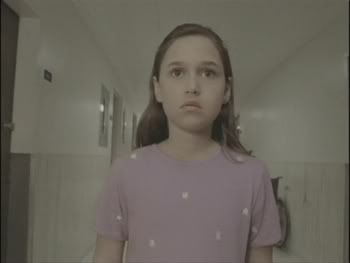
Eight year old Buffy
Writer: Rob Des Hotel, Dean Batali
Director: Deran Serafian
What's the sitch?
Poor Buffy, even being the Slayer doesn’t stop her getting a nasty case of the flu that’s currently doing the rounds. But even being as sick as a dog, she insists on going out on patrol, to keep the vamps down and to keep Angelus in check. Unfortunately she runs in to Angelus. They fight. And Buffy loses, collapsing to the ground unconscious. Luckily her friends step in just in time and ward off the nasty vamp before then rushing our fallen slayer to the hospital. Poor lamb is so ill that she is immediately admitted. Eventually she’s stabilised. But while initially delirious with fever, she sees what appears to be an ugly demon creeping through the hospital, following a small boy, who then dies the next day. The flu is very strong, and although Buffy is recovering, as are most people, the little kids in the hospital are still dying. Buffy is convinced the demon she saw when delirious is responsible, not the flu. But can she convince Giles and co. that the demon is real and not just a result of her fever? And can she stop it before it claims anymore innocent children’s lives?
What's the sitch beneath the sitch?
This is a very familiar tale. Almost genetically familiar. It is basically a cautionary fairytale horror story about the nasty monster that preys upon young children when they are at their weakest. It’s very Brothers Grimm. This is the sort of thing Buffy has done before and will do again. Like with Guillermo Del Toro’s Hellboy, there is an intrinsic link to the darkest of fairytales in this series as well as with the more standard supernatural horror fare. I think that is part of the reason I love Buffy so much. I love the myth, allegory and metaphor and the ideas of childhood innocence and optimism vs. adult cynicism and dark devilry that fairytales represent. The demon’s name in this episode is Der Kindestod, which means ‘child death’ in German. The use of the German name links this even more to the Brothers Grimm idea (being that they were German and that’s where many of their collected folk and fairytales came from). Like fairytales of old this is a cautionary tale told as a metaphor about predatory adults who prey upon young children for whatever reason – a theme that reoccurs in Buffy and in many fairytales. Actually this reminded me somewhat of Wes Craven’s New Nightmare which I watched again recently. That film turned Freddy Kreuger in to a dark fairytale monster and covered some similar themes. It’s also interesting to note that this Buffy story puts forward the other familiar idea that children often see things that adults don’t and that they are not always believed when something bad is happening to them, something that unfortunately can be true in real life.
Who's giving us the wiggins this week?
The distinctly ugly and creepy demon called Der Kindestod. Plus Angelus pops up to try and get at Buffy in the hospital…only for Xander to heroically face him down.
Why it rocks
The script is solid and has a few good ideas, even if none of them are especially new ones.
Deran Serafian directs with a slick, moody, creepy style.
Der Kindestod is one ugly and creepy demon that can still give a major case of the wiggins. What it does to the children is even creepier and more disturbing, climbing atop them to drain their life away in a painful manner.
The creature design and make-up is fab – a cross between Freddy Kreuger and The Gentlemen from season 4.
Buffy isn’t afraid of much but she is afraid of hospitals. When she was eight she was alone in a hospital room with Celia, her beloved cousin of the same age who died in terror right in front of her. This is a horrible (in a good way) scene and in reality would certainly scar any child deeply. It turns out that the same demon was responsible for Celia’s death, which now makes things personal for the Bufster.
The fairytale feel.
Xander standing guard outside Buffy’s room and refusing to leave.
Xander facing down Angelus who’s trying to get at Buffy while she’s in the hospital.
Willow’s diversionary tactic.
Joyce and her kind words to Giles over Ms Calendar’s death.
Seeing Buffy in flashback as a little girl playing superheroes with her friend Celia. ‘Power Girl’ indeed. Very cute.
Why it sucks
Apart from Angelus trying to get at Buffy this is a standalone and has nothing to do with the bigger season arc.
No Spike and Dru.
It's Buftastic
Xander facing down Angelus. Go Xan-man!
Dialogue to die for
Xander: Man, Buffy! My whole life just flashed before my eyes! I gotta get me a life!
Buffy: No, I feel fine. I mean, I'm... the world's spinning a little bit, but I like it, it's kinda like a ride.
Xander (to Angel): You're gonna die. And I'm gonna be there.
Xander (to Angel): Take a walk, overbite.
Giles: Cordelia, have you actually ever heard of tact?
Cordelia: Tact is just not saying true stuff. I'll pass.
Xander: How are you gonna stop it?
Buffy: I thought I might try violence.
Xander: Solid call.
And another thing
Buffy's cousin Celia, who died in a hospital when Buffy was eight, is the first relative of Buffy's other than her mother and father to be mentioned in the series.
Buffy is not a natural blonde.
This episode marks the first time Willow becomes interested in magic.
How many stakes?
A very Grimm tale. 3.5 (out of 5)
Friday, 2 July 2010
"Come Along, Pond."
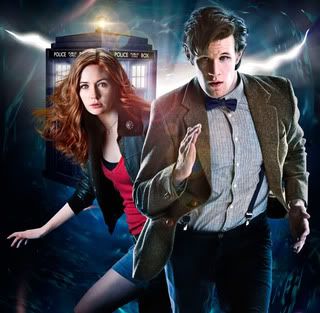
Doctor Who series five ended last Saturday and I’ve been rewatching some key episodes of the season including opener The Eleventh Hour and the final two parter The Pandorica Opens and The Big Bang. So I thought I’d give a summary of my thoughts on this brand new regeneration of the classic and much loved series.
As Doctor nine would say: ”Fantastic!”
I get Steven Moffat's approach to Who. Because it's the same one I have. It hits all the right buttons for me.
This season was a twisty crazy fairytale all about little Amelia Pond and her imaginary friend, a madman with a box who fell out of the sky.
"When I was seven I had an imaginary friend. Last night was the night before my wedding, and my imaginary friend came back."
While left all alone one night, a brave little girl called Amelia prays to Santa for someone to come and save her from the scary crack in her bedroom wall. And come to her someone does, falling right out of the sky and in to her garden. The Raggedy Doctor. A brilliant yet strangely childlike madman with a box who eats fish custard and loves bowties and thinks fezzes are cool. But after fixing the crack in the wall, The Doctor disappears leaving poor little Amelia all alone once more. But she refuses to give up on him and settles down to wait for his return. And she waits and waits and waits. Little Amelia eventually grows up to believe that she imagined it all, that nothing that happened that night was real, that the Raggedy Doctor never existed. The wonder, the magic, the imagination of childhood has finally been driven out of her. She loses herself, her innocence, even losing her name, now being called Amy. As an adult she becomes cynical, rather bitter and hard nosed - albeit charmingly so.
And then one day, many years later, right out of the blue (box), her imaginary friend returns.
The story of Doctor Who season five is not so much about hanging on to the wonder and the imagination of childhood as it is about regaining it once lost. It’s about losing our cynicism and finding the simple joy in everything that is out there beyond the narrow, repetitive often soul-destroying confines of adult life. Now, most of us (I certainly do) remember how when we were kids we could happily play for hours, imagining all sorts of weird and wonderful adventures to lose ourselves in. We didn’t need much, just our imagination and the freedom to disappear within it. But there comes a point – maybe around age eleven or twelve – when that ability starts to fade. It gets harder and harder to have imaginary fun in our own little worlds, fun that once felt so easy, so real. The magic of childhood starts to leave us as we begin the difficult journey in to adulthood, having to spend more time thinking about real life because real life has suddenly become far more complicated and far more necessary as more demands are put on us along with more responsibility.
But the good news is that just because we become adults with all the baggage that brings, we can rediscover our imaginations. We can learn to see with more innocent, wondrous eyes again. We can rediscover our inner child so to speak. That is exactly what happens to Amy. By seasons end she has found little Amelia. Literally. The Doctor was the key to her re-discovering her inner child, her sense of adventure, discovering the weird, crazy, silly, scary fun that life can be.
The Doctor: “Fourteen years since fish custard. Amy Pond. The girl who waited, you've waited long enough.”
Amy: “When I was a kid, you said there was a swimming pool. And a library, and the swimming pool was in the library.”
The Doctor: “Yeah. Not sure where it's got to now, it'll turn up! So! Coming?”
Amy: (shaking her head) “No.”
The Doctor: “You wanted to come fourteen years ago.”
Amy: “I grew up.”
The Doctor: “Don't worry. I'll soon fix that.”
This season has been my favourite of new Who so far. And that’s due primarily to its thematic undercurrent, one which chimes perfectly with what I love most in storytelling - the fairytale vibe, the innocence and wonder and scariness of childhood and of life in general. It’s what Spielberg has been doing for years. And it works for a reason. The same reason it has worked down through the centuries. It imparts important stories and lessons to children while also reminding adults what it is like to be a child, reminding us not to lose that special gift that lets us make up crazy adventures and weird and wacky stories in order to pass on down to our own children the same important messages and themes.
I love this season for its range of stories too, and that while shifting from the more overblown, camp, panto feel of Russell T Davies’ tenure to Steven Moffat’s more odd, sinister, eccentric fairytale feel, Doctor Who hasn’t lost its sense of fun nor its crazy, silly, very British whimsy. The stories this year have ranged from the downright nightmarish (The Time of Angels) to the very silly (Victory of the Daleks) to the emotionally sublime (Vincent and the Doctor). And throughout it all, Matt Smith has been a total legend and has made The Doctor his own. I liked Tennant, though I much preferred Eccleston, but Matt Smith has trumped them both. His energetic, clumsy, rather mad little old man in a young man’s body has been a joy to watch. And I love Amy too. Like many men I am in lust with Karen Gillan. She is great and has such a wicked chemistry with Matt that just crackles both onscreen and off. And she had to be great because this season was Amy’s story. It was the story of little seven-year-old Amelia Pond, the girl who waited. The girl who grew up, but who then became a child once more. Brilliant!
Any negatives? Well, my only real problem has been with some of the FX. There’s been some pretty shoddy CGI in places. So, please, someone give the guys at The Mill a kick. They do some great stuff (the two-part finale FX are all pretty darn excellent) but then they seem to counter it with some truly ropy stuff. A bit more quality assurance needed me thinks.
Anyway, this has been a wonderful new start for The Doctor with Steven Moffat proving yet again why he is such a genius of a writer and one of the very best working in the industry today. Everything in this season was thought out and planned in detail. Things are set up and pay off throughout – both plotwise and thematically. It’s an intricate machine of storytelling, which ends with the sublime two-parter of The Pandorica Opens and The Big Bang. And, of course, with season five a star has been born in the form of Matt Smith. So roll on the Christmas special.
"Geronimo!"
Monday, 31 May 2010
A child's life...

The Unloved
*UPDATE - 6/06/10* Congrats to Samantha Morton and co. for winning the 2010 Bafta award for best Single Drama
I caught this quite by accident late on TV last night. My curiosity was peaked seeing as it’s the first film directed by the excellent actress Samantha Morton and is also semi-autobiographical of her own early life in foster care and various children’s homes.
The Unloved tells of eleven years old Lucy (the excellent Molly Windsor) who’s been abandoned by her estranged mother (Susan Lynch) and then has to bear the brunt of her father’s (Robert Carlyle) violent anger. As a result she is placed in a grim, clinical, chaotic children’s home. We see all of this through Lucy’s eyes and watch as she struggles to cope with the cold, unfeeling, bureaucratic system while finding some limited comfort in her Catholic faith and the belief that she is being watched over and protected by God.
The main point of The Unloved is about how some children become lost and ignored within society and within the systems we supposedly create to help them, systems where getting one's expenses for petrol comes before attending to a lonely child. Systems that become more about the systems themselves than about what the actual individual child needs. Love. That’s all Lucy is seeking all the way through, to make a connection with someone and to feel loved and wanted. But the cold clinical world around her only isolates her more, while no adult, no person of authority will properly answer that most simple of questions she keeps asking: "Why can't I live with my mummy?" Which can also be interpreted as: "Why doesn't anyone love me?" Towards the end of the film she finally manages to ask her mother directly: “Can I live with you?” To which her mother has no proper answer, being too caught up in her own issues. The film ends with Lucy being sent back to the children’s home by her mother. The last shot is of the little girl sat on the bus, alone, staring blankly around before looking deep in to the camera lens pulled up tight on her face. It is a long unbroken take lasting several minutes. It is directly challenging the audience to look at her, to face the reality of the life many children like Lucy are forced to lead. To do better for them.
Films like this are not fun, nor do they make for particularly pleasant viewing. They usualy don’t have a happy ending. But they are important. Not all films should be escapist entertainment with pat resolutions and happy ever afters. We have an almost endless supply of those. And thank God for them. But some films should raise social issues; should ask important questions; should reflect the real lives of others; should challenge us to do something to improve things for those less fortunate. The Unloved is one such film. And I was impressed with the job Samantha Morton did with it. Some people have compared her approach and style to that of Ken Loach or even Shane Meadows. But it really isn’t. It is far more reminiscent visually and artistically of Asian cinema (Japanese or Korean) while also being rather Kubrick-like too. Although the grim subject matter lends itself to the likes of social realists such as Loach and co. and the excellent acting is of that same naturalistic method, Morton has instead attempted to create something different. This is a film that tells its story and highlights its issues and themes and makes its emotional and social points in a mainly visual manner with limited dialogue. There are long, steady takes and long scenes where nothing is said, with only images and sounds and sometimes music. Lucy is constantly absconding from the chaotic children’s home she’s been placed in, journeying around the city, searching for what she needs. The often-handheld camera chaos of the home contrasts wonderfully with the imagery of the world outside. The wide, soulless, motionless cityscapes, the big empty grey skies, the huge monolithic buildings that dwarf the child, the dark abandoned tunnels she must travel through. The most beautifully shot scene in the film is the graveyard where Lucy goes and plays alone under the trees amongst their fallen blossom, a place where she seems happy and that is a link to her faith, something which is a constant theme. While in the graveyard she sees a deer casually grazing amongst the headstones. So she just sits down and watches it, perhaps feeling kindred with the animal, both of them getting something of what they need in the most unlikely of places. There is a strong fairytale vibe in all of this: a child figuratively or literally lost in the world; isolation and loneliness; adults as potentially dangerous or just plain unfeeling figures; the quest for love and for belonging. Pan’s Labyrinth did something similar in a fantasy form as did the amazing Let The Right One In. Even new Doctor Who is now riding the same train.
Hey, what can I say? I’m a total sucker for this stuff. It’s my thematic nirvana.
The Unloved may not be perfect, but, overall, it is a very well made, heartfelt and affecting little film that largely achieves what it sets out to achieve. So I say well done to Samantha Morton. 4/5
Trailer:
The Unloved on 4onDemand
Sunday, 4 April 2010
Trust Him. He's The Doctor.

Matt Smith's debut as The Doctor has now aired in the UK.
And I gotta say...it was brilliant!
Steven Moffat's rejuvenated Who is (pardon the pun) just what The Doctor ordered. The tone is indeed like Moffat’s promised dark fairytale - especially the first ten minutes or so of this Moffat written story titled The Eleventh Hour. This episode charts the first and then second meeting between the new Doctor and his new companion Amy Pond. And this meeting is quite special, clever and touching.
So, most importantly, how is our new Doctor?
He's great.
Being still in the grip of his regeneration cycle Smith's Doctor is rather confused, manic, and still a bit Tennant-y in his ways. But as the episode goes on he slowly becomes more of his own man. Eccentric in a young-yet-old professor-ish way, he is also effortlessly witty, a bit goofy, a bit reckless and quite a lot charming. Smith's Doctor makes an instantly great impression. The food tasting scene with the little girl in the kitchen is simply brilliant. “Fish Custard.” LOL. You can see why Smith leapt out at Moffat and co. during auditions. He genuinely does have an odd, otherworldly quality to him. And as new companion Amy Pond, Karen Gillan is very good too. In this episode she is all (lovely) legs, fiery red hair and cynical attitude. She’s a bit messed up, a bit of a bad girl and doesn’t really trust The Doctor and isn’t afraid to give him what for. She is also very, very easy on the eye. Amy and The Doctor should prove for an interesting and fiery dynamic with their relationship having been set up in a very cool and intriguing way.
And the story? It’s fine. It does the job. An escaped intergalactic shape-shifting alien prisoner is hiding out on Earth while the Prison Guards (giant flying eyeballs) arrive to give the world only twenty minutes to hand the prisoner over before they destroy the whole planet. As a story it’s not as good as what Mr Moffat has given us before (we’ve been spoiled) and he uses it mostly as a hanger for introducing the new Doctor and the new feel to the series as well as reminding us of its mythical heritage. And in that way it works spot on. But Moffat still manages to do what he always does so brilliantly. He layers his script with smart precision plotting and intensely creative ideas while also inventing scary images and creepy concepts based around things an audience (especially kids) can relate to as being odd and kinda disturbing at a very basic level. At night a big crack in the wall of a child’s bedroom becomes sinister and so very creepy with whispered voices leaking out. A bleak phrase is repeated over and over through every piece of electronic communications equipment everywhere. Extra rooms in a house seem to appear but are only visible glimpsed through the corner of the eye. An alien changes itself to appear as regular people but gets it a bit wrong, appearing as a mother walking hand in hand with twin little girls, except the children speak with the mothers voice and vice versa. And it also appears as a man walking a dog, but the man barks and growls, not the dog. Weird and properly creepy. And Moffat being Moffat he also laces his script with some great quips and one liners. “You’re Scottish. Fry something!” The direction of the episode is excellent too. There are two stand out moments: a glimpse in to The Doctors mind as he recalls an event that has just occurred, looking for a clue in his own memory. Then, later on, glimpses of all past ten Doctors ending with the heroic emergence of Doctor number eleven to confront the bad guys. Also, the first ten or so minutes of the Doctor crashing the TARDIS and meeting a little girl left alone in her house and scared by the sinister crack in her wall is just all-round superlative. A very special shout out goes to young Caitlin Blackwood who plays said little girl. She is wonderful and does a quite brilliant job opposite Matt Smith.
As well as a regenerated Doctor, the rest of the show has had a ground up regeneration too. There’s a new title sequence with a dark and scary time tunnel complete with lightening bolts striking the TARDIS. And there’s a new, more electronic and choral version of the iconic theme. The TARDIS has also regenerated after being almost wrecked at the episode’s start. It looks newer and brighter outside while inside the console room is twice as big and on multiple levels with curved and odd-angled walls and with stairs going off in many directions. It looks weird and very, very cool.
So colour me impressed. I could tell within the first ten minutes that I loved this new take on our favourite Timelord, it being much closer to my own personal tastes than that of RTD’s version. Not to take anything away from the awesome job Russell T did, but I just love the whole dark fairytale vibe, the more sinister-yet-playful feel. And I can see a whole new generation of kids properly hiding behind their couch come Saturday evenings as a result. And their parents might just be joining them.
So bring it on. And like the man says: “Trust me. I’m the Doctor.”
Indeed you are, sir.
Saturday, 30 January 2010
Pucker up, baby!
The Princess and the Frog
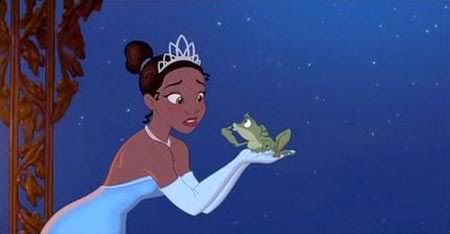
Traditional 2D animation is back courtesy of the rejuvenated Disney Animation Studios. The original hand drawn art form, which created Disney and made it what it is, makes a welcome and long overdue return after the virtual standardisation of filmed animation as 3D CGI. It is perhaps ironic then that the people who were arguably responsible for that trumping by 3D are the ones who have brought the original 2D style back to us. And so Disney Animation, under the overall stewardship of John Lasseter and the wizards at Pixar, gives us The Princess and the Frog, a movie that takes its audience back to Disney basics with a charming, funny, magical, musical fairytale adventure in the best traditions of the genre.
It’s New Orleans in the 1920’s and Tiana is a young woman who wants to follow her father's dream by opening her very own restaurant. She works hard, two jobs, non-stop, giving up any sort of fun or chance of a wider life by being solely focussed on achieving her one and only goal. Love and romance is the furthest thing from her mind. It’s interesting that Tiana is a very modern and career driven ‘realist’ Disney 'princess' – which makes her rather different from her previous Disney kin. Anyway, Tiana gets mixed up with visiting Prince Naveen who’s financially broke and in New Orleans looking for a rich bride to marry for her money. Except that when Tiana meets him, Naveen has been turned in to a frog by the wonderfully sinister voodoo sorcerer Dr. Facilier as part of his evil plan to gain control of the city and appease the dark forces from ‘the other side’ whom he owes bigtime. Frog Prince Naveen, mistaking Tiana for a real princess at a fancy dress ball, asks her to kiss him to break the spell (as in the old fairytale). Tiana is repulsed, but, seeing an opportunity, she makes a deal with the frog prince: if she agrees and he returns to human form he’ll then help her to get her restaurant. Naveen agrees. And so she lays a smacker on him…with unexpected results for them both. The frog pair then head off together on an adventure in to the bayou to find a way to break the spell and return them both to human form. Along the way they make some new friends, get in to various amusing scrapes with hunters and wildlife, and learn more about each other, themselves and what it is they both really need from life, which is likely different to what it is they each might want. As with all Disney fairytales The Princess and the Frog is full of strong and positive messages for kids with the prime one here being about being open to life and all its possibilities, to take time to look around and see what you might be missing. To keep an open mind and embrace new things that might come along. Basically to chase your dreams but make sure you live life while you do.
Technically The Princess and the Frog is top notch. The film looks beautiful. There is something about hand drawn animation and painted backdrops even the best CG can’t quite capture. There is a soulful, human feel to it. And the design and animation on show here is top quality. The depiction of New Orleans and the surrounding countryside looks and feels wonderful and very atmospheric with the film using many of the city’s real locations including Bourbon Street and the creepy and evocative Lafayette Cemetery. Of course, being Disney, it is a heightened and overall ‘nicer’ representation of the real city and the time period (racism doesn’t seem to exist here.) But for this film that approach feels right and can be forgiven. The character designs are mostly realistic with humans looking human and not particularly stylised or with exaggerated features. The designers have more fun with the non-human characters such as Louie the trumpet playing Alligator and Reggie the Cajun firefly.
Now, being a New Orleans set musical, jazz is gonna have to play a major part. And it does. The jazz styles of the time pervade almost every aspect of the film and virtually every tune, which range from big band and trumpet driven numbers to more soulful southern ballads. The songs by Randy Newman are all very good and help tell the story and sell the characters while making for some uncontrollable toe tapping. Then there’s the voice cast. They are all spot on. I especially loved Jennifer Cody as grown up Charlotte, Tiana’s rich, flighty, shallow yet kindly friend since childhood. She has a wonderfully funny scene with her daddy in the café Tiana works in where she’s not letting her ‘big daddy’ get a word in edgeways. Then there’s Ritchie Montgomery as Reggie the Cajun firefly who longs for his one true love Evangeline. He is also great and helps provide Reggie with the films’ most heartfelt storyline, which forms part of the motif for the entire film and also harkens back to a previous Disney classic of old. And a special shout out goes to the great Keith David as Dr Facilier, the downright creepy and evil voodoo dude. He looks like Baron Samedi in Live and Let Die and gives the film a really cool, dark and scary edge. He even conjures up some shadow demons from the other side to hunt down our froggy heroes. I could see some young kids being kinda freaked out at these nasties as well as by some of the other weird and scary imagery on show here. And that’s great. Just what a proper fairytale should be.
Being a big kid I really enjoyed The Princess and the Frog. It knows exactly what it is and does what it sets out to do beautifully. The script is familiar and traditional yet always interesting and fun while providing a nice modernist edge to its heroine. As with the best of Disney it also gives us some wonderful and memorable supporting characters. The film looks lovely and the old style jazz inspired music is catchy and often infectious in its energy. The film may not have the same depth or emotional impact of Disney and/or Pixar’s absolute finest but The Princess and the Frog is still a darn good family film made with real care and love. It also reminds us of the wonderful artistry and atmosphere of traditional animation, of just how special that medium is and how it should never be lost to film. And to think it took the intervention of a 3D animation company to remind us. Nice one Pixar.

Traditional 2D animation is back courtesy of the rejuvenated Disney Animation Studios. The original hand drawn art form, which created Disney and made it what it is, makes a welcome and long overdue return after the virtual standardisation of filmed animation as 3D CGI. It is perhaps ironic then that the people who were arguably responsible for that trumping by 3D are the ones who have brought the original 2D style back to us. And so Disney Animation, under the overall stewardship of John Lasseter and the wizards at Pixar, gives us The Princess and the Frog, a movie that takes its audience back to Disney basics with a charming, funny, magical, musical fairytale adventure in the best traditions of the genre.
It’s New Orleans in the 1920’s and Tiana is a young woman who wants to follow her father's dream by opening her very own restaurant. She works hard, two jobs, non-stop, giving up any sort of fun or chance of a wider life by being solely focussed on achieving her one and only goal. Love and romance is the furthest thing from her mind. It’s interesting that Tiana is a very modern and career driven ‘realist’ Disney 'princess' – which makes her rather different from her previous Disney kin. Anyway, Tiana gets mixed up with visiting Prince Naveen who’s financially broke and in New Orleans looking for a rich bride to marry for her money. Except that when Tiana meets him, Naveen has been turned in to a frog by the wonderfully sinister voodoo sorcerer Dr. Facilier as part of his evil plan to gain control of the city and appease the dark forces from ‘the other side’ whom he owes bigtime. Frog Prince Naveen, mistaking Tiana for a real princess at a fancy dress ball, asks her to kiss him to break the spell (as in the old fairytale). Tiana is repulsed, but, seeing an opportunity, she makes a deal with the frog prince: if she agrees and he returns to human form he’ll then help her to get her restaurant. Naveen agrees. And so she lays a smacker on him…with unexpected results for them both. The frog pair then head off together on an adventure in to the bayou to find a way to break the spell and return them both to human form. Along the way they make some new friends, get in to various amusing scrapes with hunters and wildlife, and learn more about each other, themselves and what it is they both really need from life, which is likely different to what it is they each might want. As with all Disney fairytales The Princess and the Frog is full of strong and positive messages for kids with the prime one here being about being open to life and all its possibilities, to take time to look around and see what you might be missing. To keep an open mind and embrace new things that might come along. Basically to chase your dreams but make sure you live life while you do.
Technically The Princess and the Frog is top notch. The film looks beautiful. There is something about hand drawn animation and painted backdrops even the best CG can’t quite capture. There is a soulful, human feel to it. And the design and animation on show here is top quality. The depiction of New Orleans and the surrounding countryside looks and feels wonderful and very atmospheric with the film using many of the city’s real locations including Bourbon Street and the creepy and evocative Lafayette Cemetery. Of course, being Disney, it is a heightened and overall ‘nicer’ representation of the real city and the time period (racism doesn’t seem to exist here.) But for this film that approach feels right and can be forgiven. The character designs are mostly realistic with humans looking human and not particularly stylised or with exaggerated features. The designers have more fun with the non-human characters such as Louie the trumpet playing Alligator and Reggie the Cajun firefly.
Now, being a New Orleans set musical, jazz is gonna have to play a major part. And it does. The jazz styles of the time pervade almost every aspect of the film and virtually every tune, which range from big band and trumpet driven numbers to more soulful southern ballads. The songs by Randy Newman are all very good and help tell the story and sell the characters while making for some uncontrollable toe tapping. Then there’s the voice cast. They are all spot on. I especially loved Jennifer Cody as grown up Charlotte, Tiana’s rich, flighty, shallow yet kindly friend since childhood. She has a wonderfully funny scene with her daddy in the café Tiana works in where she’s not letting her ‘big daddy’ get a word in edgeways. Then there’s Ritchie Montgomery as Reggie the Cajun firefly who longs for his one true love Evangeline. He is also great and helps provide Reggie with the films’ most heartfelt storyline, which forms part of the motif for the entire film and also harkens back to a previous Disney classic of old. And a special shout out goes to the great Keith David as Dr Facilier, the downright creepy and evil voodoo dude. He looks like Baron Samedi in Live and Let Die and gives the film a really cool, dark and scary edge. He even conjures up some shadow demons from the other side to hunt down our froggy heroes. I could see some young kids being kinda freaked out at these nasties as well as by some of the other weird and scary imagery on show here. And that’s great. Just what a proper fairytale should be.
Being a big kid I really enjoyed The Princess and the Frog. It knows exactly what it is and does what it sets out to do beautifully. The script is familiar and traditional yet always interesting and fun while providing a nice modernist edge to its heroine. As with the best of Disney it also gives us some wonderful and memorable supporting characters. The film looks lovely and the old style jazz inspired music is catchy and often infectious in its energy. The film may not have the same depth or emotional impact of Disney and/or Pixar’s absolute finest but The Princess and the Frog is still a darn good family film made with real care and love. It also reminds us of the wonderful artistry and atmosphere of traditional animation, of just how special that medium is and how it should never be lost to film. And to think it took the intervention of a 3D animation company to remind us. Nice one Pixar.
Subscribe to:
Posts (Atom)